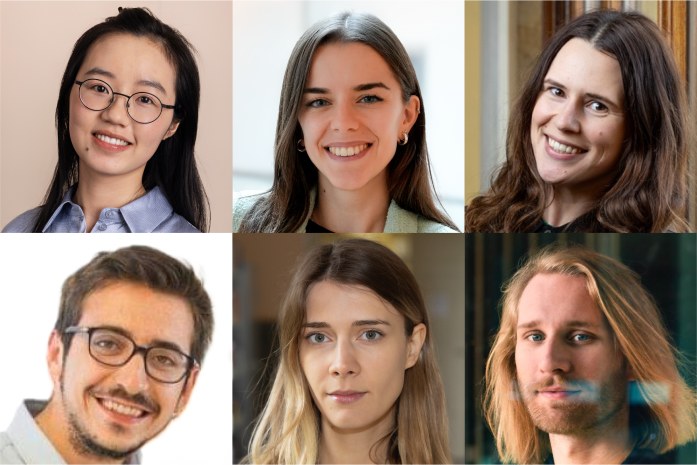
The Young Scholar grant of the LIVES Centre is a support for doctoral and post-doctoral researchers who plan to conduct innovative research on the life course. The funding can be used either to write a paper (for PhD students and post-docs) or to develop a new project (for post-docs). In 2026, LIVES awarded a grant to 3 researchers from the University of Lausanne and 3 researchers from the University of Geneva.
UNIGE | |
Adriana Rostekova Longitudinal studies show that pet ownership is associated with slower cognitive decline in later life, yet the short-term processes underlying these links are not yet fully understood. Building on evidence that brief human-animal interactions improve mood and reduce stress, this project investigates whether daily pet-related activities are linked to same-day and next-day affect, stress, and cognitive performance. Using a 7-day daily diary design in a lifespan sample of adult pet owners, we examine age, pet species, and interaction contexts as moderators to identify short-term mechanisms through which everyday pet-related routines may contribute to cumulative cognitive resilience across adulthood. |  |
Gianvito Laera Prospective memory (PM) is essential for everyday activities and for promoting autonomy across the life course; however, evidence on its development remains fragmented. This project aims to build the first open-access catalogue of longitudinal datasets assessing PM. Following PRISMA scoping-review guidelines, we identified 13 eligible datasets with repeated PM measures. The catalogue will systematically document study design, samples, PM measures, assessment frequency, access conditions, and life course variables. By making harmonized metadata publicly available, secondary analyses, cross-study comparisons, and integrative life course research are promoted, advancing the understanding of PM trajectories and determinants, and fostering transparent and collaborative research. |  |
Leonhard Unterlerchner Sequence analysis (SA) is regarded as one of the key longitudinal approaches in life course research. This project aims to foster the diffusion of two methodological developments in SA — consensus and noise clustering. Consensus clustering produces typologies by combining multiple ones. Consequently, the stability and the quality of the results are increased. Noise Clustering identifies observations that do not belong to any common type. Doing so, it successfully identifies chaotic or atypical trajectories. These two methods will be implemented in R programming language and a step-by-step practical guide will complement the code. |  |
UNIL | |
Jinfeng Xu This project studies an overlooked source of social capital in the labor market: affinal kinship, or ties formed through marriage. While prior research emphasizes parents, friends, and neighbors, little is known about the economic role of in-laws. Using Swiss administrative data and the premature death of parents-in-law as an exogenous shock, the project aims to provides causal evidence that in-law networks affect earnings and employment. The findings show that marriage expands access to labor market support beyond blood ties and sheds new light on family networks and gender inequality. |  |
Naomi Downes Naomi Downes’ project investigates how the division of labour between coparents is associated with children’s socio-emotional outcomes across diverse family structures in Switzerland, using data from the first wave of the SNF Sinergia FamyCH national survey. The project includes a research stay within a sociology team at Utrecht University specialising in gender inequity. This collaboration will inform the development of an exposure measure that integrates actual divisions of labour with parents’ perceived gender norms and expectations. By adopting a life-course perspective, this research will advance understanding of how gendered expectations and family inequalities shape child outcomes. |
|
Paola Sillitti As populations age and the burden of chronic conditions increases, the need for long-term and end-of-life care continues to grow. Yet access to such care remains unequal across demographic and socioeconomic groups. This project examines how individual characteristics and health-system features shape inequalities in long-term and end-of-life care among older Europeans, combining micro-level demographic and socioeconomic analyses with system-level assessments of long-term care systems. Through collaborations with Paris Dauphine University and the Organization for Economic Cooperation and Development (OECD), the project aims to generate policy-relevant evidence to advance equity and quality of care in ageing societies. | 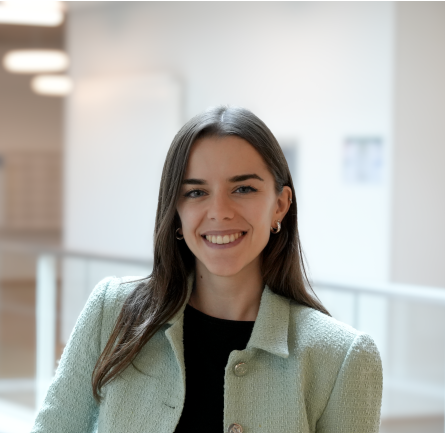 |